
Clogged Drain? Drain Cleaning Starts With Which Line Is Blocked, in Benson
A single slow sink and a tub that gurgles when the washing machine drains are two different problems with two different fixes. Our dispatch line hands your call to one of our plumbers serving Benson, who works out which line is blocked before choosing a tool.
Call (520) 340-7175 Jump to drain answersDispatch staffed around the clock
Start here: one fixture or the whole house?
Where the water backs up tells you which pipe is blocked, and that decides the tool, the cost drivers and whether the problem is yours to fix at all. Check the symptom first, because a clog at one sink and a clog in the line to the street are not the same job.
| What you see | Where the blockage probably is | First step |
|---|---|---|
| One sink, tub or toilet is slow or stopped | The trap or branch line serving that fixture | Plunge or snake that fixture; the rest of the house is fine |
| Two or three fixtures on the same floor drain slowly | A shared branch drain | A plumber snakes the branch from a cleanout or fixture opening |
| A toilet gurgles when the sink or washer drains | A partly blocked line or a vent problem | Stop using water and have the line checked |
| Water rises in the lowest tub, shower or floor drain when you flush or run laundry | The main drain line | Stop using water; this is a main line stoppage |
| Every fixture backs up, with sewage smell | Main line or the sewer lateral to the City main | Treat as a when the blockage is in the sewer line |
Kitchen sink drains: grease, food and the dishwasher connection
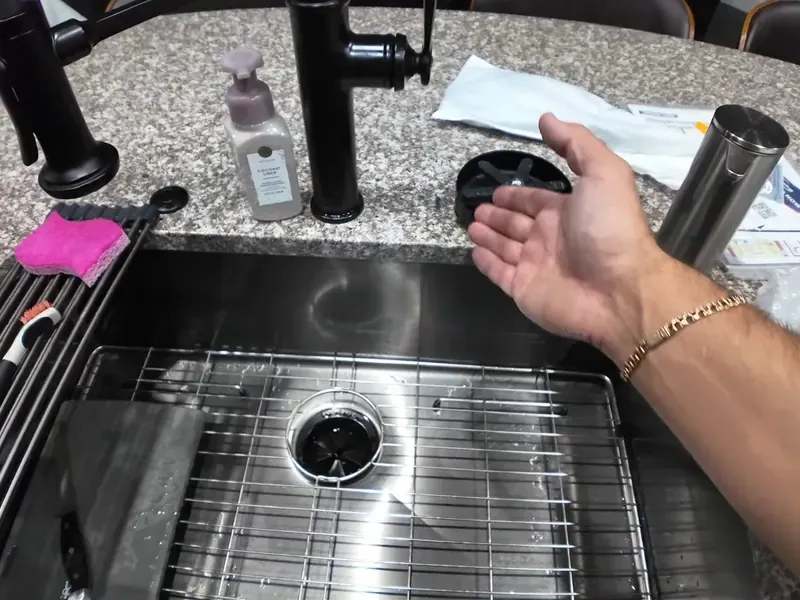
A kitchen sink that drains slowly or backs up usually has grease and food scraps coating the line. Hot water and soap soften grease briefly, then it cools farther down and hardens again. A slow sink that also floods the other basin of a double sink often points to a blockage past the shared tailpiece. The dishwasher drain connects to the same line or to the disposal, so a dishwasher that leaves standing water is part of the same clog. If a disposal is involved, see a jammed garbage disposal.
Bathroom drains: toilets, tubs and showers
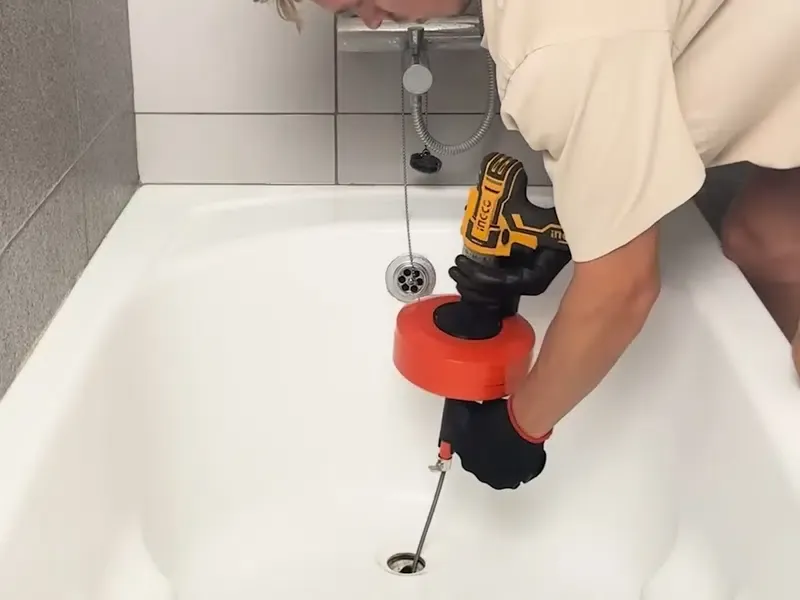
Toilets clog on paper and wipes, including products sold as flushable. A closet auger clears most toilet blockages without removing the toilet. Tub and shower drains clog on hair and soap scum just below the strainer, and a drain tool or a hair catcher fixes most. A toilet that clogs again within days suggests a deeper problem in the line, or a toilet that keeps clogging that is partly obstructed or poorly vented.
Snaking: when an auger is the right tool
A drain snake, also called an auger or rooter, is a flexible cable with a cutting or hooking head turned by a motor or hand crank. It breaks through a blockage or pulls it out, which restores flow. Snaking suits soft blockages, hair, paper and the first stage of roots, and it is the normal first step for a single clogged fixture. Its limit is that it opens a channel through a clog rather than scouring the pipe wall, so grease that has built up along the line can narrow the pipe again.
Hydro jetting: when water pressure does the work
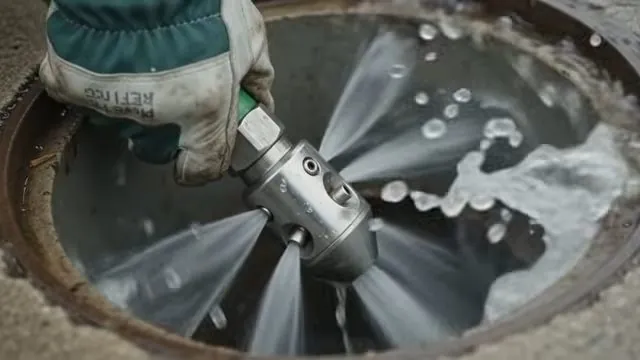
Hydro jetting sends high-pressure water through a nozzle that scours the inside of the pipe. It removes grease, scale and silt that a snake leaves behind and can cut small roots. It suits main lines and lines that keep clogging. It is not suitable for every pipe: old, cracked or collapsed lines can be damaged, which is why a camera look often comes first.
| Tool | Suits | Limits |
|---|---|---|
| Plunger | A single fixture with a simple blockage | Does nothing for a blockage deeper in the line |
| Snake or auger | Hair, paper and soft clogs; first stage of root intrusion | Leaves a narrow channel when grease coats the pipe wall |
| Hydro jet | Grease, scale, silt and recurring clogs in sound pipe | Risky in cracked or collapsed pipe |
| Camera | Seeing the cause: roots, breaks, bellies, foreign objects | Shows the problem but does not clear it |
Camera inspection and why a drain keeps clogging
A small camera on a flexible cable shows the inside of the pipe on a screen. It identifies what a snake cannot: a section that sags and holds water, a crack, roots entering at a joint, or an object lodged in the line. A drain that clogs again and again within weeks has a cause that cleaning alone does not remove. The usual causes are grease build-up, wipes and paper, roots, a belly in the pipe and damaged pipe. Ask the plumber to show the footage and to record where on the line the problem sits.
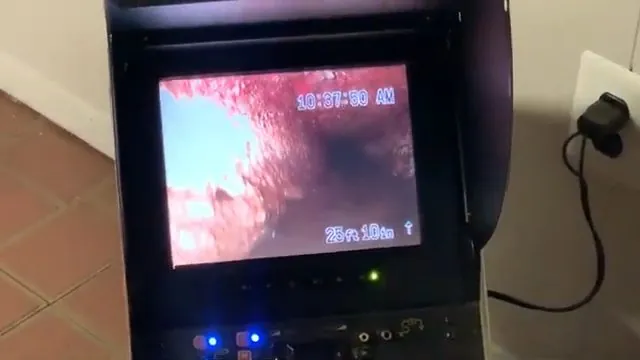
Tree roots in drain lines
Roots enter through small gaps at joints and grow into a mat of fine roots inside the pipe. Cutting clears the line for a time, and repeated stoppages from the same spot mean the joint or pipe needs repair.
Drain pipe repair and cast iron lines
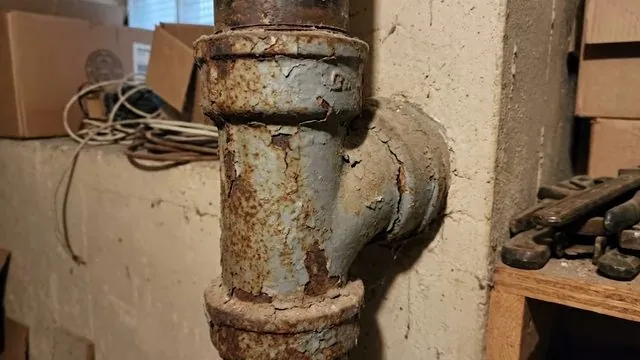
Cast iron drain pipe corrodes from the inside, scale narrows the opening and rough surfaces catch debris. Cracked or separated sections leak or let roots in. Repair ranges from replacing a failed section to replacing the run. The plumber should name the material, show the damaged section and explain why cleaning will not hold.
Main line stoppages
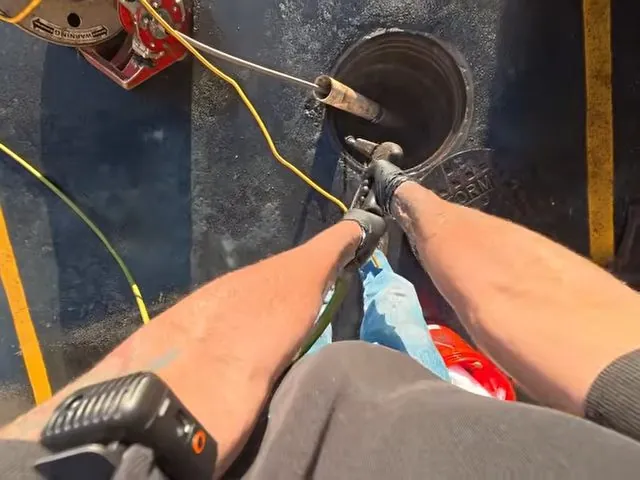
The main drain carries every fixture's wastewater out of the house. When it blocks, the lowest fixtures back up first. A cleanout, a capped access pipe usually outside near the house, lets a plumber reach the line without removing a toilet. Inside Benson city limits, the City taps the main, and the owner answers for the pipe running from that tap to the house, which a licensed contractor installs. Source: the City of Benson tap request form, checked 2026-10-30. A blockage past the property line in the main is the City's concern, and a plumber who camera-checks the lateral can tell you which side the problem is on. For a damaged lateral, see a sewer lateral repair or replacement.
Yard, storm and French drains
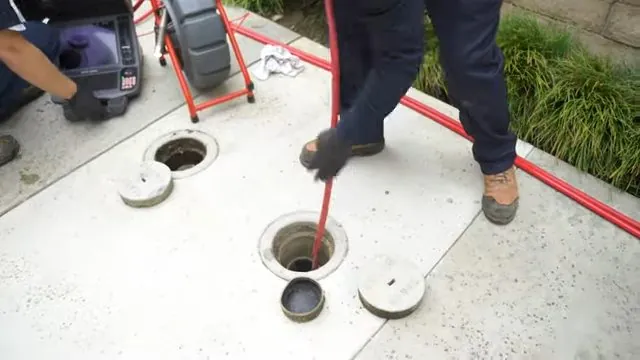
Yard drains, storm drains and French drains carry rainwater rather than household sewage, and they clog with leaves, silt and roots. They are cleared by snaking or jetting from the grate or cleanout. They should never be tied into the sewer, and a plumber should say which system a pipe belongs to before working on it.
Smaller drain problems
- Floor drains in a garage or utility room dry out, lose their water seal and let sewer smell up; pour water into the trap monthly to restore the seal.
- Drain odors at a sink usually come from a dry trap, a dirty overflow or a partial blockage; a camera or snake finds which.
- Commercial kitchen drains need grease management and a maintenance routine; see restaurant and shop drains for that.
Sump pumps and ejector pumps
A sump pump sits in a pit and moves groundwater or stormwater away from a building. An ejector pump moves wastewater from a fixture below the sewer line up to it. Either kind is installed by a plumber, usually with an electrician for any new circuit, and either one needs a pit, a discharge line to an approved location and a check valve. Call a plumber if the pump runs constantly, never runs when the pit is full, or makes a grinding sound.
What you can safely try first, and what makes it worse
Safe to try
- Use a plunger on one fixture; seal the overflow opening on a sink or tub with a wet cloth first.
- Use a drain tool to pull hair from a tub or shower strainer.
- Run hot tap water for a minute after use to move soft residue along.
Likely to make it worse
- Chemical drain cleaners. They can damage old pipe, sit in a standing blockage and burn skin or eyes; plumbers working on a line treated with chemicals take extra care.
- Forcing a rented power auger through an unknown line; it can wrap on itself or tear a joint.
- Flushing wipes, paper towels or grease because the label says flushable.
Septic is a different system
If the property is outside city sewer and uses a septic tank, the system is permitted through Cochise County Environmental Health at 520-586-8206. A septic backup is handled by a septic contractor, not by a drain cleaning visit. Source: University of Arizona Extension, county contacts for onsite wastewater systems, checked 2026-10-30.
Questions about clogged drains
Is hydro jetting better than snaking?
Neither is better in every case. Snaking opens a channel through a soft clog and is the usual first step for a single fixture. Hydro jetting scours the pipe wall, so it suits grease, scale and clogs that keep coming back, as long as the pipe is sound. A camera look beforehand shows which tool fits.
Why does my drain keep clogging?
A clog that returns means the cause is still in the pipe. Common reasons are grease coating the line, wipes and paper, tree roots at a joint, a sag that holds water, or damaged pipe. A camera inspection shows which one it is, and the repair follows from that.
Who installs sump pumps?
A plumber can install a sump or ejector pump, including the pit, discharge line and check valve. A new electrical circuit is done by an electrician. Ask the plumber who handles each part before work starts.
My kitchen sink is backing up or draining slowly. What should I do?
Stop running water into the sink, remove standing water if you can, and check whether the dishwasher or disposal also backs up. A plunger helps with a simple blockage. If water rises in another fixture or the sink keeps backing up, the blockage is in the line and needs snaking.
Can a clogged shower or toilet drain be snaked?
Yes. Tub and shower drains are snaked through the strainer opening or the overflow, and toilets are cleared with a closet auger or a snake that passes the trap. If more than one fixture is slow, the blockage is in a shared line, and a plumber snakes it from a cleanout.
What does it take to clear a clogged kitchen sink with a snake?
A plumber removes the trap, feeds a cable into the wall pipe, breaks through the blockage and flushes the line with hot water. Grease may need a second pass or jetting. The plumber should tell you if the blockage is farther down in the branch line.
Other pipes that share a drain problem
Drain backing up and not moving?
Stop running water, then call and say which fixtures are slow. The dispatcher sends the job to one of our plumbers covering Benson.
Call (520) 340-7175 Contact details