
Slab Leak Signs, Location and Repair Choices for Benson Homes
A warm spot on the floor, a hum of water from the floor at night or a meter that will not stop moving can mean a pipe is leaking under concrete. Call the dispatch line and a plumber on our team who covers Benson takes the job; before recommending a repair, that plumber confirms where the water is going.
Call (520) 340-7175 See slab leak answersCalls answered at any hour of the day
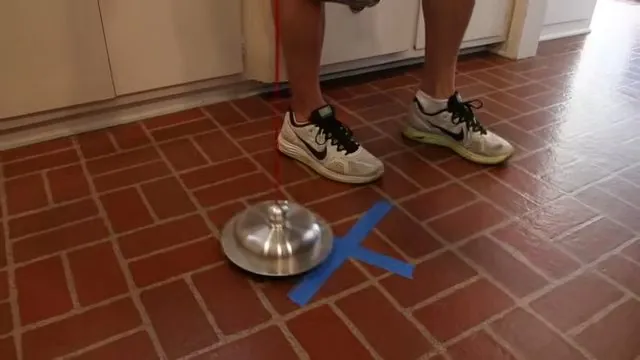
Signs of a slab leak
A slab leak is a leak in a pipe that runs under or inside a concrete floor. Because the pipe is out of sight, the signs show up on the surface, and several of them have other causes. Use the list below to decide whether the evidence points to the floor.
- A warm or hot spot on the floor, which suggests a leaking hot water line.
- A faint rushing noise from the floor or walls when every tap is closed.
- A water meter that keeps moving with everything off.
- Damp, discolored or lifting flooring, or carpet that stays wet along one strip.
- Cracked or loosened tile that follows a line across a room.
- A musty smell with no visible source.
- Hot water that takes longer to arrive, or a water heater that seems to run constantly.
- Water at the outside edge of the foundation or a wet patch in the yard next to the house.
| What you notice | Slab leak is likely when | Another cause to rule out |
|---|---|---|
| Warm floor | The warm area follows a line and a hot tap is not running | Sun through a window, radiant heating or a nearby duct |
| High water bill | The meter moves with everything off | Irrigation, a toilet flapper or a change in household use |
| Sound of running water | The sound is steady and stops when the main is closed | A running toilet or a pressure regulator hissing |
| Damp flooring | Moisture stays after a spill is ruled out | A plumbing leak above, a window leak or a drain problem such as a clogged drain |
Confirming the leak is under the slab
The meter test is the first step; the page about confirming that water is escaping lays it out. A plumber then narrows the leak by isolating the hot water line from the cold, closing off sections and watching which pressure test fails. A hot-line leak often warms the floor above it; a cold-line leak is found by sound and pressure. This stage is called detection or location, and it decides whether the repair is a single opening in the floor or something larger.
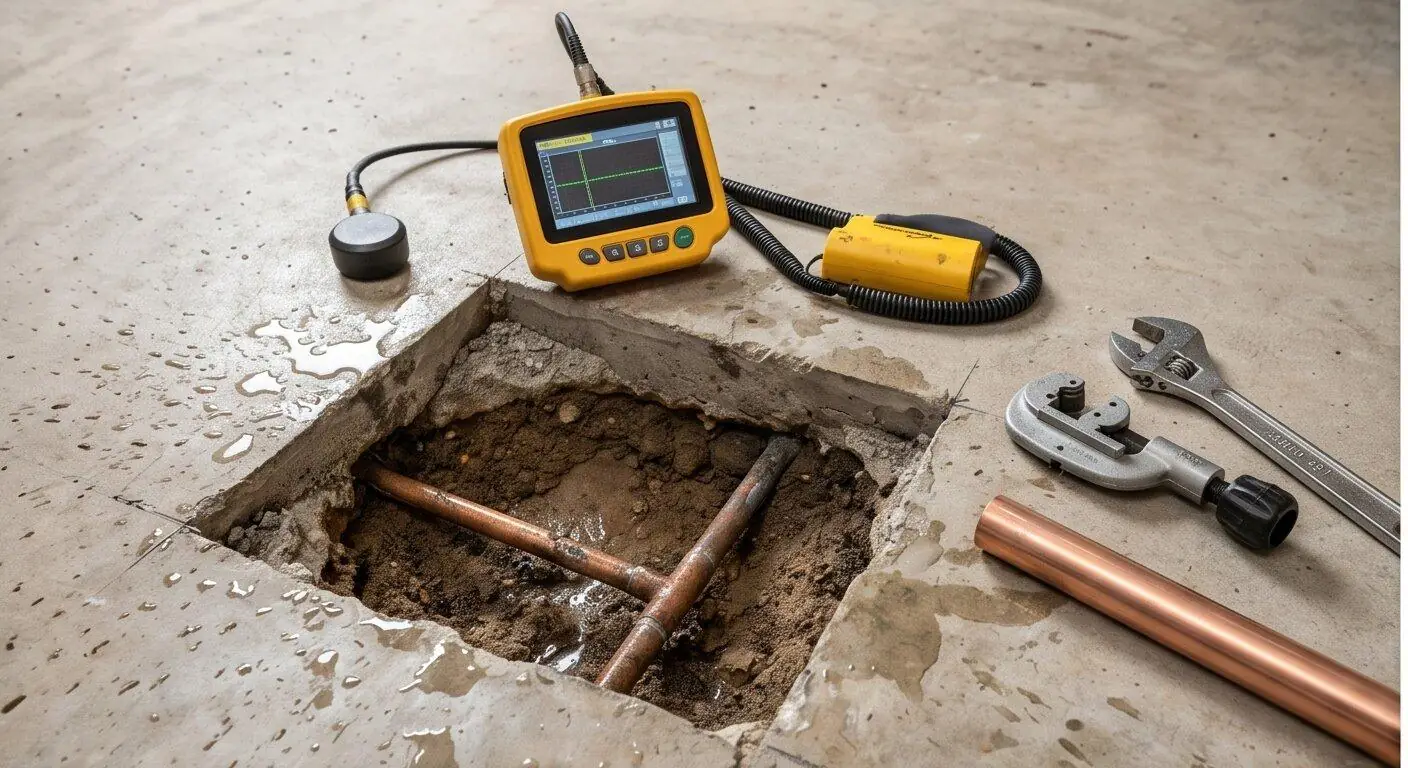
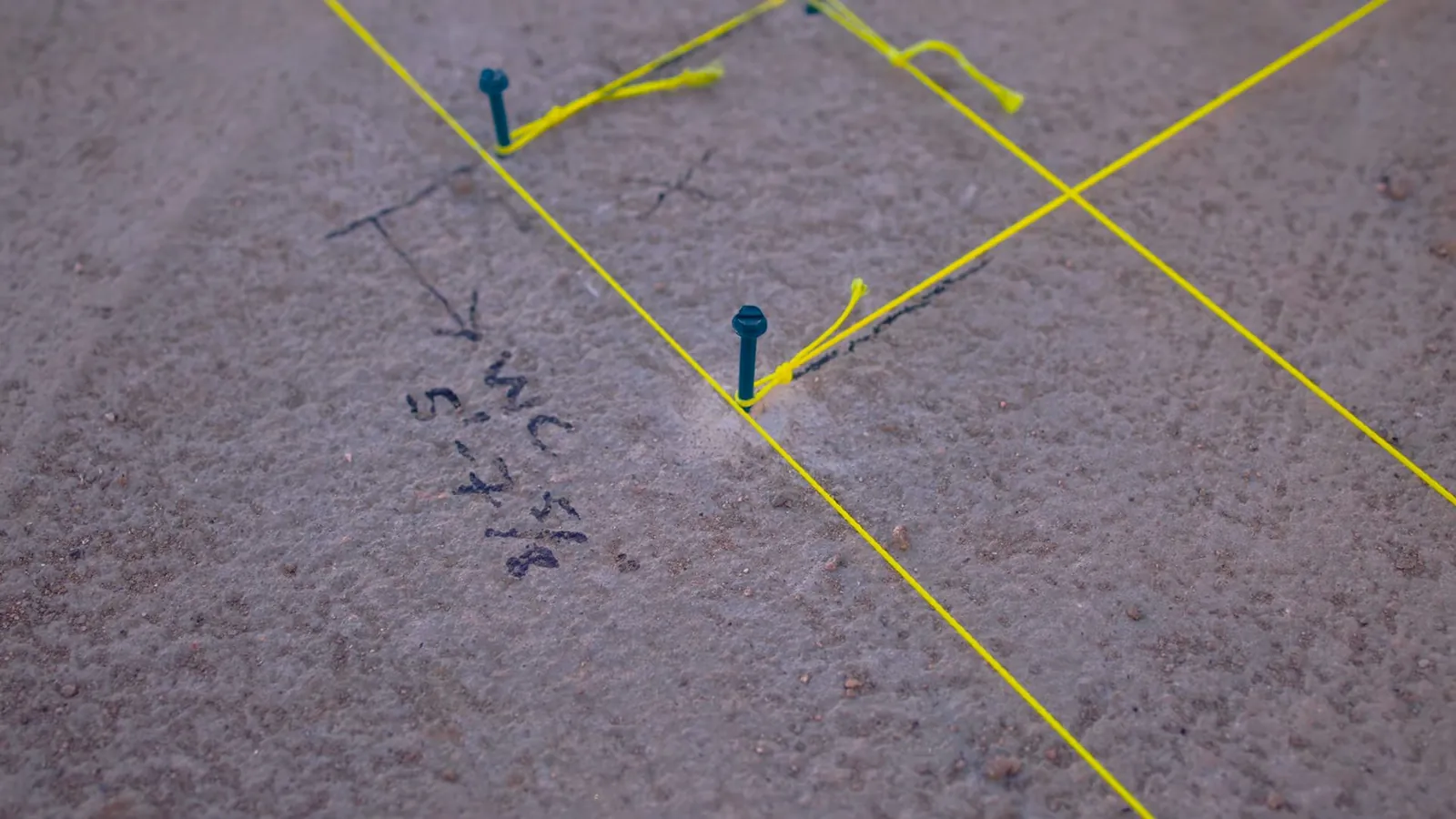
Detection equipment includes acoustic listening devices that pick up escaping water through concrete, thermal imaging that shows warm lines and moisture patterns, and pressure gauges that show which section loses pressure. No single tool is perfect, so a careful plumber combines two and marks the floor with the position before any cutting starts.
Foundation and concrete: what the plumber confirms first
This page does not assume what your house is built on. Some homes sit on a concrete slab, others on a raised floor over a crawlspace, and some have a mix. The plumber should confirm the foundation type and where the water lines run before quoting. If the pipes are in a crawlspace, a slab leak is not the right label and the repair is usually simpler because the pipe can be reached from below.
When a leak has been running for a long time, water can soften the soil under a slab. Settling, heaving or new cracks in walls and floors are a structural question for a foundation or engineering professional, not a plumbing repair. A plumber stops and repairs the leak, and the foundation trade evaluates any movement afterward.
Repair choices for a leak under a slab
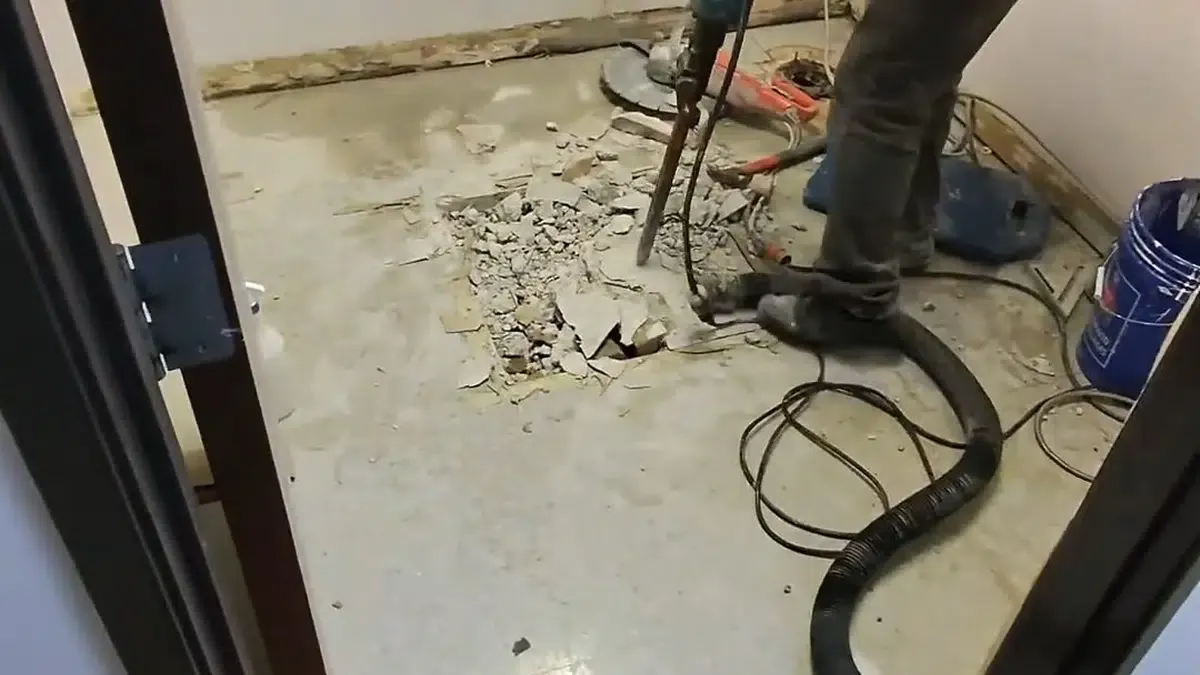
There is more than one way to fix a slab leak, and the right one depends on pipe material, how many leaks there are, how easy the area is to reach and what finish covers the floor. These are the methods a quote should name, and the table shows where each one fits.
| Method | What it involves | Suits when |
|---|---|---|
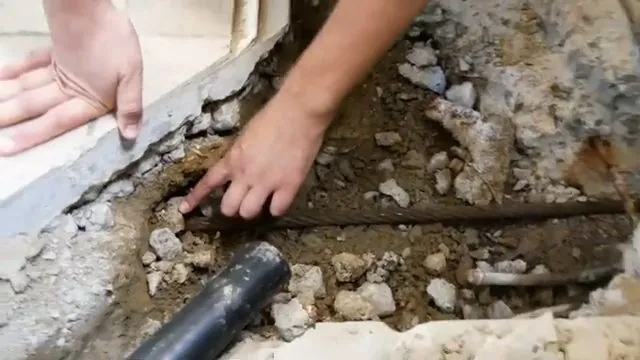
| Spot repair through the slab | Opening the concrete above the leak, repairing or replacing a short section, then patching | One leak, a known position and a floor that can be reopened |
| Tunneling under the slab | Digging in from outside or from a nearby opening to reach the pipe from below | The floor finish is hard to remove or the area is difficult to open |
| Reroute | Abandoning the underslab section and running new pipe through walls or the attic | Several leaks, poor pipe or a long run under the floor |
| Epoxy or lining | Coating the inside of the existing pipe to seal pinholes and small leaks | Pipe is intact and a lining product suits its size and condition |
| Repipe | Replacing the supply system, often with a reroute through walls or the attic | Leaks keep returning, as discussed on the page about repiping the whole house |
Ask the plumber to explain why the chosen method fits your pipe and floor, and what happens if the next leak appears in the same line. A reroute is a bigger job up front than a spot repair, and it can avoid repeated floor work; the plumber should lay out both.
Insurance, documents and who handles water damage
Insurers treat a sudden pipe break differently from slow seepage over a long period, and policies vary on what they cover. Read your policy or call the insurer before repairs begin, and ask what documents they want. Photographs of damage, the date you first noticed signs, the meter readings and the plumber's written finding of where the leak was are the items that usually matter.
Wet carpet, drywall, cabinets and insulation are a different job from the pipe repair. Plan for drying out wet flooring and walls to be handled by a restoration contractor once the leak is stopped, since flooring that stays damp can develop mold.
What to ask for in a slab leak quote
- The foundation type as the plumber found it and where the leak was located.
- Which method is proposed and the reason it was chosen over the others.
- What happens to the floor finish and who handles patching, painting or flooring afterward.
- Whether a permit or inspection applies; the Building Department can answer that question.
- What will be documented for an insurer.
If you are told that the whole house must be repiped, ask for the evidence: more than one leak, corroded pipe at open sections or a failed pressure test across several lines. If the reason is only one location, ask why a spot repair or reroute of that line is not enough.
Questions about slab leaks
What are the early warning signs of a slab leak?
The earliest signs are usually a water bill that rises with no change in use, a meter that moves with all water off, a faint rushing noise when every tap is shut, and a warm spot on a floor. A musty smell or a damp strip of flooring can follow. Any one of these has other possible causes, so confirm with the meter test first.
What are the main ways to repair a slab leak?
The methods are a spot repair through the slab, tunneling under the slab from outside, rerouting the line through walls or the attic, lining the inside of the pipe with epoxy, and repiping. The right choice depends on pipe material, the number of leaks, access and the floor finish.
Can a leak under a slab be fixed without breaking up the floor?
Sometimes. Tunneling from outside, rerouting the pipe overhead and lining the pipe can all avoid opening the floor. Whether they are suitable depends on pipe condition and where the leak is, so ask the plumber to compare them with a spot repair.
What does a slab leak look like from the outside?
Often nothing shows. Signs that can appear are water along the foundation edge, a wet strip in the yard near the house, damp flooring inside and a floor that feels warm in one area. If you see any of them with a moving meter, call a plumber for detection.
Think the leak is under the floor?
Turn off the main valve if the floor is wet, then call. The dispatcher assigns one of our plumbers to confirm where the water is going.
Call (520) 340-7175 Contact details