
Replacing a Water Heater? Water Heater Installation Decisions on Fuel, Size, Permit and Scope
A tank that has failed leaves a household without hot water and a decision that cannot wait long: same fuel or a change, same size or different, and what the Building Department needs to hear. A dispatcher books one of our plumbers for the Benson area and the plumber starts with a look at the old unit.
Call (520) 340-7175 Replacement answersDispatch answers around the clock
Replace now or wait? Signs and the risk of waiting
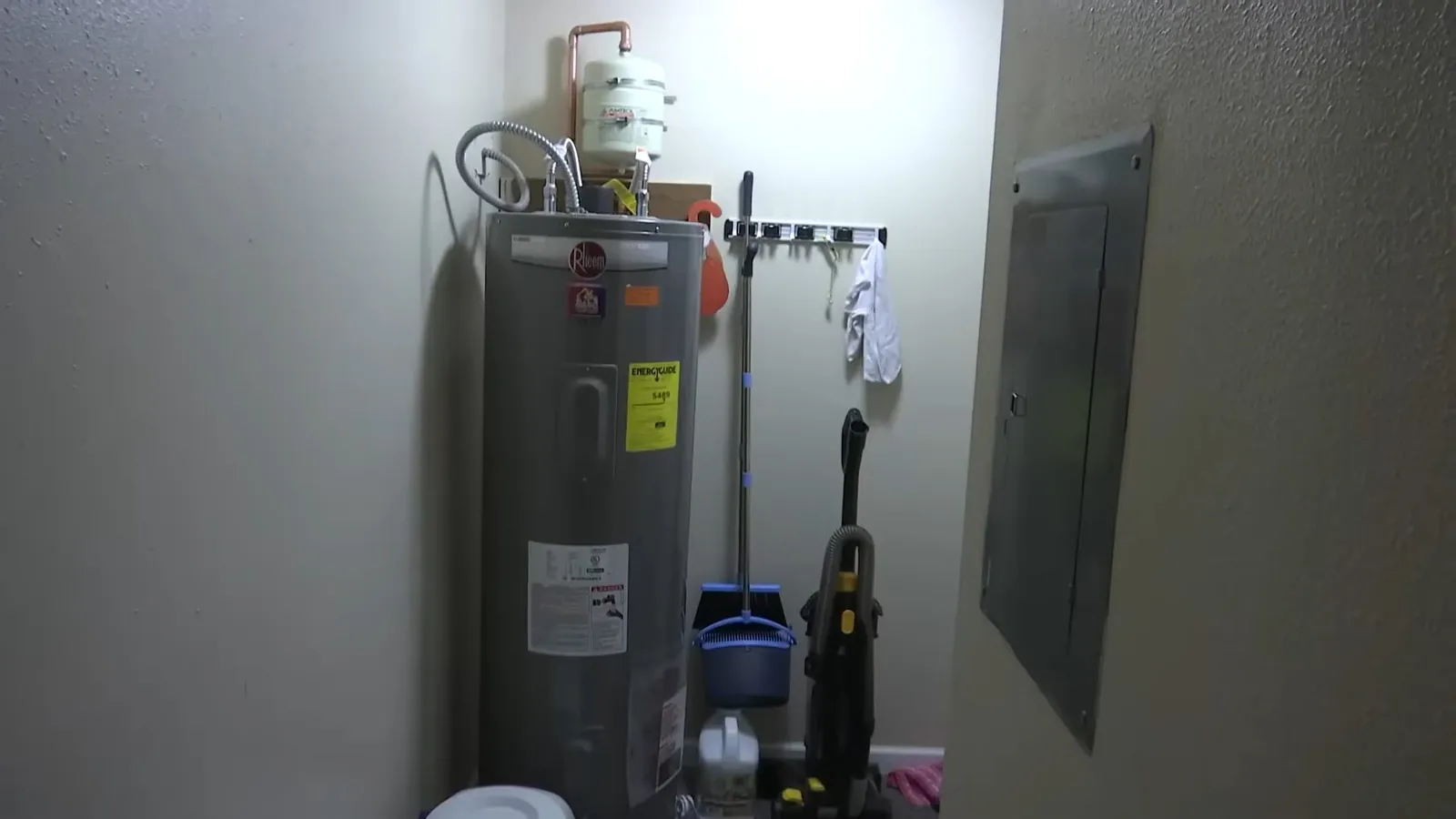
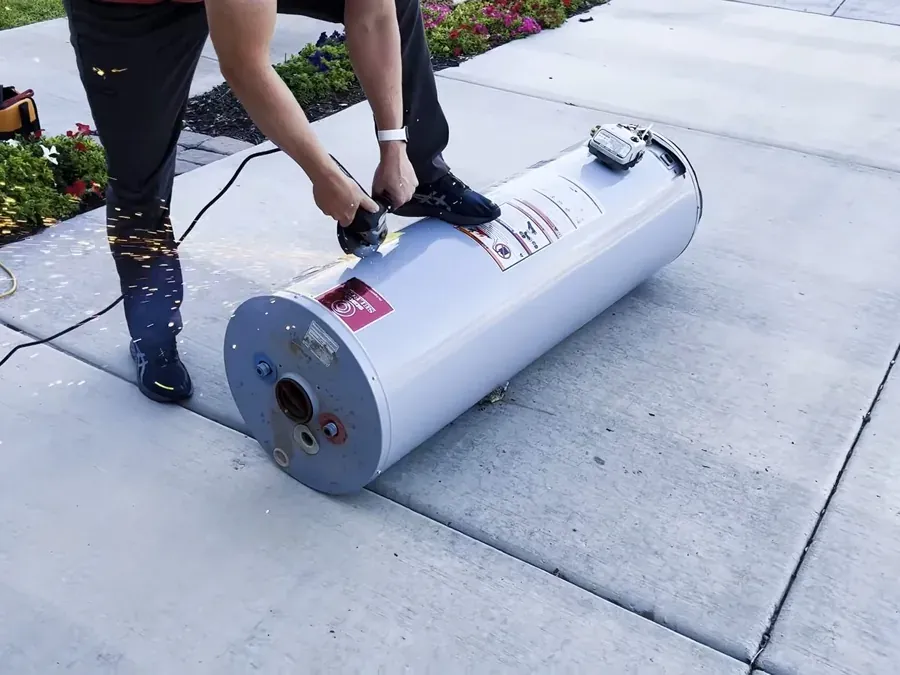
A water heater rarely gives a long warning, and the risk of waiting is not the same for every fault. A tank that is leaking from its body cannot be repaired, and the volume released can damage a floor and the walls around it. A unit that is merely old, heats slowly or needs a part may give you time to plan. The answer starts with what is wrong, which is covered on the page about whether a repair still makes sense.
| What you see | Urgency | What to do |
|---|---|---|
| Water at the base from the tank body or seams | High: the tank is failing | Close the cold supply, cut power or gas, call |
| Rust-colored hot water only | Moderate: corrosion inside the tank or lines | Have the plumber check the tank and the anode |
| Hot water runs out sooner than it used to | Low to moderate: sediment or a failed part | Ask for a diagnosis before replacing |
| The unit has failed twice in a short span | Moderate: repeat repairs point to replacement | Ask for a replacement scope and compare it with another repair |
| Gas smell, soot or scorched paint near the heater | Emergency | Get everyone outside, then phone 911 |
Gas, electric, hybrid or heat pump: what changes with each fuel
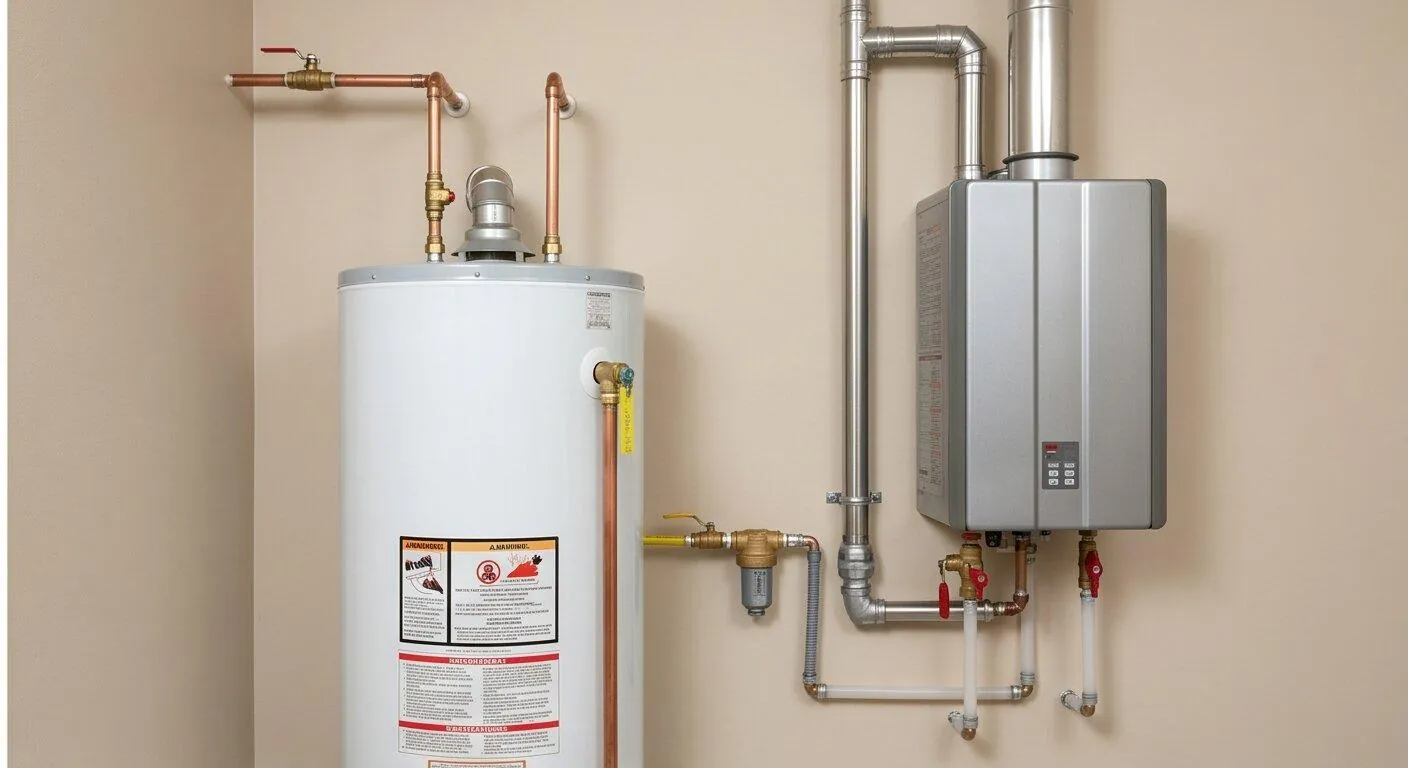
The easy swap is the same fuel in the same spot. Changing fuel changes the job: gas needs a supply line, a vent and combustion air, electric needs a dedicated circuit of the right size, and a heat pump unit needs space, airflow and a condensate drain. Ask the plumber to list what must be added or altered before comparing quotes, because two quotes for different fuels are not comparable until the extras are on the page.
| Fuel | What must be in place | Questions to ask |
|---|---|---|
| Natural gas or propane | Gas supply line, a flue or vent, combustion air, a drip leg and a shutoff | Is the vent size and slope correct, and does the gas line need work? |
| Electric | A circuit and breaker of the size on the label, plus a disconnect where required | Does the panel have capacity, and who does the electrical work? |
| Heat pump or hybrid | Space and airflow around the unit, a condensate drain, an electrical circuit | Will the room stay warm enough, and where does the cooled air go? |
If a gas line must be extended or repaired for the new unit, see a gas pipe that needs work. For households weighing a different style entirely, on-demand units are covered on their own page.
Sizing: matching gallons to the household
A tank that is too small runs out in the middle of a morning, and one that is too large wastes energy keeping water hot. The usual way to size is by the number of people, the number of bathrooms and whether two hot water uses overlap, such as a shower and a dishwasher. The label on the old unit gives its capacity, and the plumber should explain why the same size or a different one is being proposed. Where space is tight, ask about a shorter, wider tank before assuming the old footprint is the only option.
Expansion tank, pressure and what the supply does to the unit
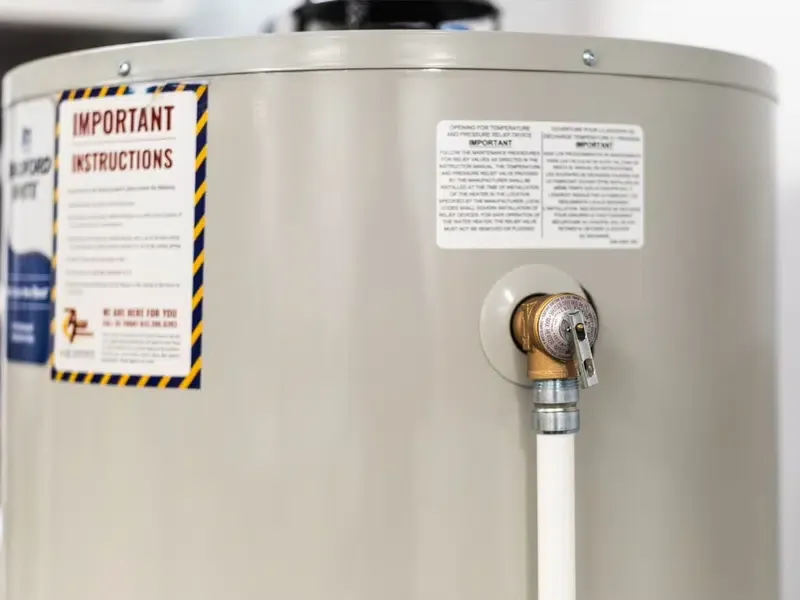
When water heats in a closed system it expands. An expansion tank gives that volume somewhere to go, and without it pressure can rise and strain fittings and the relief valve. Ask whether the home has a check valve or pressure regulator that closes the system, and whether an expansion tank is part of the scope. High supply pressure from the street side is a separate problem, treated under pressure from the supply side.
Permits, codes and the Building Department
For permits, call the City's Building Department on (520) 720-6328; it can say whether a replacement needs one at your address. The City's page names the 2015 plumbing, residential and fuel gas codes as the editions in force. No published permit rule for this job turned up, so keep the reply with the invoice. Source: Benson Building Department page listing adopted codes, checked 2026-10-30.
What a written installation scope should say
A scope in writing prevents surprises on the day. It should name what comes out, what goes in and which parts of the job are not included.
- The size, fuel and type of the new unit, and the reason it differs from the old one if it does.
- Whether a drain pan, expansion tank, new shutoff valves and a new relief discharge line are included.
- Venting and gas or electrical work, and who is responsible for each part.
- Whether a permit or inspection applies, based on what the Building Department said.
- Removal and disposal of the old unit.
- What the plumber will test before leaving: leaks, gas connections, temperature and pressure relief.
Choosing who installs it
Ask for license details before work begins; they are available on request through the dispatch line. A plumber who explains the vent, the gas connection and the pressure setup unprompted is usually thinking about the whole job, not only the swap.
Special cases: two heaters, a leaked electric unit and pipe trouble after a swap
Some homes have two water heaters, for example one at each end of a large house. Replacing both at once saves a second visit, but replacing one and keeping the other is reasonable when only one has failed and the other is young. Ask for a clear condition report on each unit.
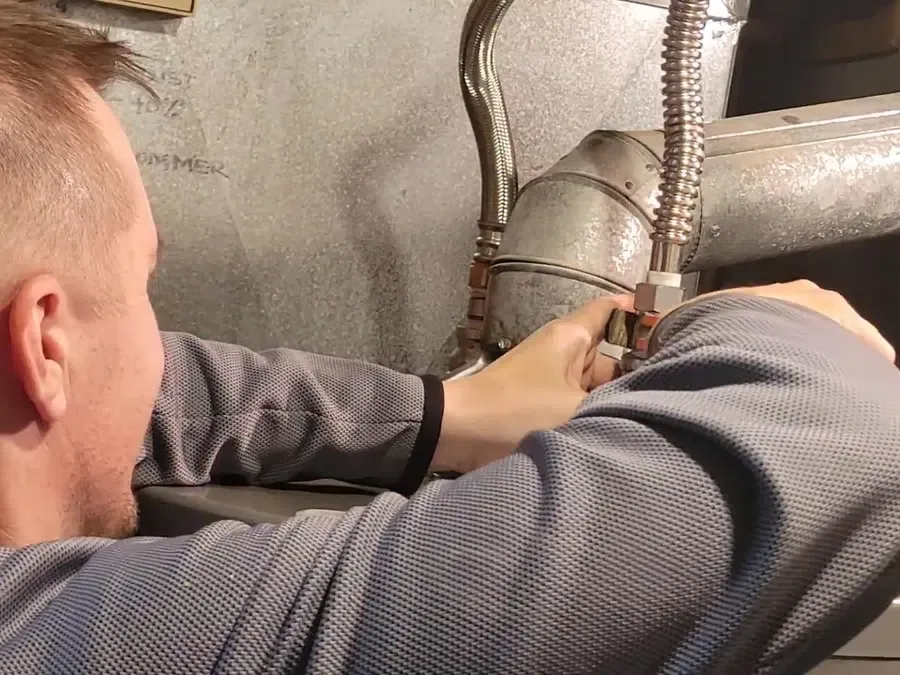
Occasionally a pipe fails shortly after a replacement. The cause is usually a fitting disturbed during the swap, a weak section of old supply pipe stressed by new pressure, or an unrelated pipe that happened to be flexed. If water appears under the house after a heater is replaced, close the main, call the plumber who did the work and take photos; the failure may sit in a different part of the system, and the question of whether a repair still makes sense is separate from the pipe damage.
Point-of-use and under-sink units
A small point-of-use unit supplies one sink or a distant bathroom so you are not waiting for hot water to travel. It is an add-on, not a replacement for the main heater.
Questions about replacing a water heater
How do I know whether to replace a water heater now or wait?
Look at what failed. Water from the tank body means replacement, since a tank leak cannot be repaired. A unit that is older, slow or needs one part may give you time to plan. Ask the plumber for a diagnosis and a replacement scope together so you can compare.
What if a pipe under the house bursts after a water heater replacement?
Close the main shutoff, take photos and call the plumber who installed the unit and a plumber for the burst section. Replacement can disturb a weak line or raise pressure on one, so ask for the pressure setup to be checked as well.
Can I replace two water heaters at once?
Yes, if both are near the end of their life or you want one visit. If one is young, replacing only the failed one is reasonable. Ask for the age and condition of each before deciding.
How do I know what size water heater my home needs?
Count the people and bathrooms and note which hot water uses overlap. The old unit label shows its capacity, and the plumber should explain any change. Space and fuel can also limit the choices.
My electric water heater leaked. Do I replace it or repair it?
If water comes from the tank body, replace it. If it comes from a fitting, the relief valve or the drain valve, a repair may be enough. Turn off power at the breaker and shut the cold supply while you wait.
Water heater down and no hot water?
Call and tell the dispatcher the fuel type, the age on the label and whether the tank is leaking. One of our plumbers covering Benson will talk through replacement with you.
Call (520) 340-7175 Contact details